The Ultimate Guide to Duck Nutrition: How, What, and How Much to Feed

Proper duck nutrition is the foundation of a happy, productive flock. Whether you just brought home your first box of fluffy Pekin ducklings, you’re raising Mallards for your homestead, or you just want to be the person at the local pond who actually knows what they’re doing, getting the food right is the most important job you have.
The truth is, ducks are like toddlers—they will happily eat things that are bad for them. There is a huge gap between what a duck wants to eat and what its body actually needs to stay strong. If you get it wrong, you end up with ducks that don’t lay eggs, have leg problems, or get sick easily.
Planning to add to your flock? If you are considering adding the most popular backyard breed to your farm, check out our American Pekin Duck Buying Guide to ensure you’re prepared for their specific needs before you buy.
In this complete guide, we are going to take the guesswork out of the equation. We’ll break down the “science” of what waterfowl eat into simple steps, debunk old myths like the “bread trap,” and give you a clear roadmap for every stage of a duck’s life. From the day they hatch to their peak egg-laying years, we’ve got you covered.
Table of Contents
How to Feed Ducks: The Golden Rules
When most people think about how to feed ducks, they imagine a simple scene: tossing a handful of grain onto the grass. But if you’re raising a flock on a farm or homestead, the way you feed them is just as important as what you put in the bowl. Ducks have unique bodies, and if you don’t follow a few “Golden Rules,” even the best food can cause health problems.
The Absolute Law: No Food Without Water
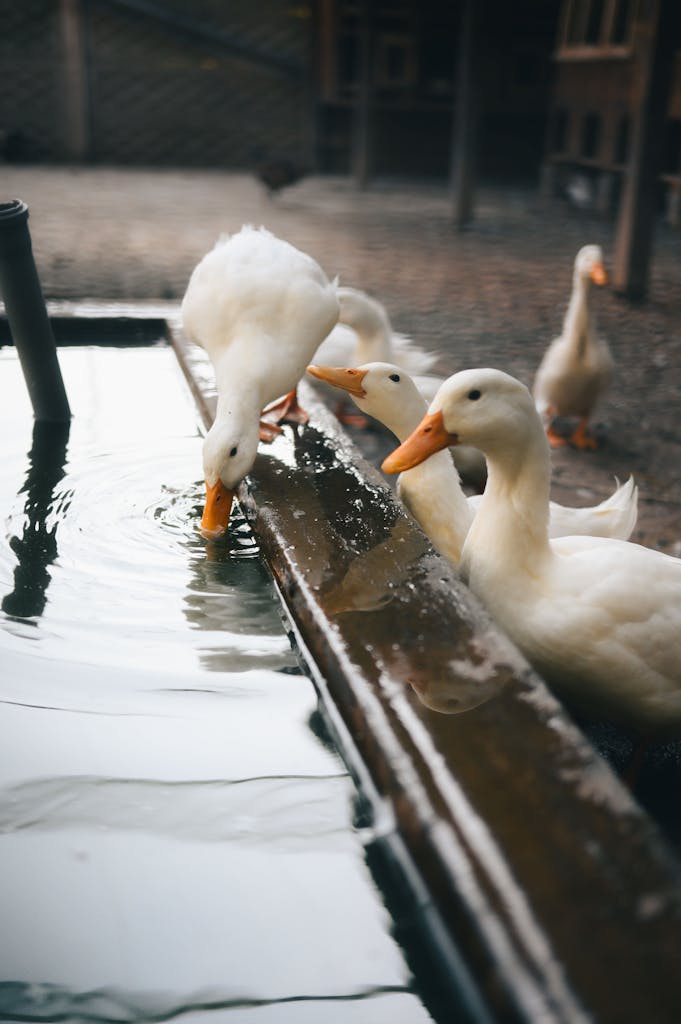
If you learn only one thing today, let it be this: Ducks must have water to eat. Unlike chickens, ducks do not have teeth, and they don’t produce much saliva. To swallow their food, they use a “scoop and filter” method. They take a mouthful of dry feed and immediately dunk their bill into water to create a slurry that they can swallow.
- The Choking Risk: If a duck eats dry pellets without water nearby, the food can get stuck in their throat.
- Cleaning the Nares: Ducks have holes on top of their bills called “nares” (their nostrils). While eating, these holes often get clogged with feed dust. They need deep water—deep enough to submerge their entire head—to blow out their nostrils and keep their respiratory system clear.
- Sour Crop: Without enough water to move food along, the feed can sit in the duck’s “crop” (a storage pouch in the neck) and ferment. This leads to a nasty infection called “sour crop” that can be fatal if not treated.
Tip: Always place your waterer within 3 to 5 feet of your feeder. Any further, and the ducks will make a massive mess trekking back and forth, wasting feed along the way.
Scattering vs. Feeders: Which is Best?
Depending on whether you are visiting a pond or managing a backyard flock, your “delivery method” should change.
For Wild Ducks: The “Scatter” Method
If you are feeding ducks at a local park or pond, scatter the food thinly along the water’s edge. * Why? If you dump a big pile in one spot, the biggest, meanest duck will “guard” it and bully the smaller ducks away. Scattering ensures everyone gets a turn.
- Natural Behavior: It encourages their natural instinct to forage and sift through the mud and shallows, which keeps their minds and bodies active.
For Domestic Ducks: Duck Feeding Station Ideas
On a farm, scattering food on the ground is a recipe for trouble. Wet ground leads to moldy feed, and leftover grain attracts “uninvited guests” like rats, mice, and raccoons.
To keep your homestead clean, consider these setup ideas:

- Gravity Feeders: These look like large tubes or buckets that slowly drop food into a tray as the ducks eat. They keep the bulk of the feed dry and protected from the weather.
- Long Troughs: If you have a large flock, a long PVC pipe cut in half or a wooden trough works best. This gives every duck “shoulder room” so they aren’t fighting during breakfast.
- The “No-Waste” Bucket: Many homesteaders use a 5-gallon bucket with 90-degree PVC elbows inserted into the sides. The ducks stick their heads into the holes to eat, which prevents them from “shoveling” the food onto the floor with their bills.
Keep it Clean: The Environment Rule
Ducks are notoriously messy eaters. They love to mix their food and water into a muddy soup.
- Inside the Coop: Try to keep the main feeding station outside the coop in a run. Feeding inside leads to wet bedding, which creates ammonia smells and can cause foot rot (bumblefoot).
- Pick up the Scraps: Never leave uneaten wet food (like vegetables or soaked grain) out overnight. It will rot quickly and can cause Botulism, a deadly toxin that can wipe out a flock in 24 hours.
What to Feed Ducks Instead of Bread?
For decades, bread was the go-to snack for park visitors. We now know that bread is essentially “junk food” for waterfowl. It is high in carbohydrates but lacks the protein, vitamins, and minerals ducks need.
Feeding ducks bread doesn’t just lack nutrition—it can actually harm the environment and the animals’ natural behavior. As National Geographic explains, rotting uneaten bread can lead to algae blooms that kill fish and spread diseases like avian botulism.
The Danger of “Angel Wing”
Feeding bread leads to a condition called Angel wing in ducks diet. This is a permanent deformity where the carpal joint (the wing “wrist”) twists outward, making the feathers stick out laterally. Affected ducks lose the ability to fly and often perish in the wild because they cannot escape predators or migrate.
The “Better Than Bread” Shopping List
If you want to be a responsible duck enthusiast, reach for these safe foods instead:
- Thawed Frozen Peas: A duck favorite and packed with niacin.
- Oats: Rolled, jumbo, or steel-cut (uncooked).
- Birdseed: Any standard wild bird mix is excellent.
- Chopped Greens: Kale, romaine lettuce, and swiss chard mimic their natural aquatic vegetation.
The “Can They Eat It?” Safety Checklist
As a duck owner, you’ll often wonder about kitchen scraps. Here is the definitive breakdown based on common search queries.
Are Grapes Safe for Ducks?
Yes. Grapes are a powerhouse of energy. However, you must never feed them whole. Because ducks swallow food whole, a round grape is a major choking hazard. Always cut grapes into halves or quarters before serving.
Can Ducks Eat Spinach?
Yes, but in moderation. This is a “controversial” keyword because spinach contains high levels of oxalic acid. In large quantities, oxalic acid binds to calcium, preventing the duck’s body from absorbing it. This can lead to thin eggshells or bone issues. Limit spinach to an occasional treat.
Can Ducks Eat Uncooked Rice?
Yes. One of the oldest urban legends is that uncooked rice will swell in a duck’s stomach and cause them to explode. This is scientifically false. Uncooked rice is a safe, calorie-dense snack that ducks thoroughly enjoy.
Toxic Foods for Ducks List (The “Hard No” List)
Avoid these at all costs:
- Avocado: Contains persin, which is cardiotoxic to birds.
- Chocolate/Caffeine: Leads to heart arrhythmias and seizures.
- Onions/Garlic: Can cause hemolytic anemia (destruction of red blood cells).
- Salty/Sugary Foods: Ducks cannot process high levels of salt; it leads to salt poisoning.
How Much to Feed Ducks Per Day?
For a new homesteader, one of the most stressful questions is: “Am I feeding them enough, or am I feeding them too much?” Unlike some farm animals that will stop eating when they are full, ducks can be quite greedy.
Precision is the key to a healthy flock. If you overfeed, your ducks will become obese. In the duck world, extra weight leads to Bumblefoot (painful foot sores and infections) because their legs aren’t designed to carry excess fat. On the other hand, if you underfeed, your ducks will stop laying eggs, their feathers will look dull, and they won’t have the energy to stay warm in the winter.
Daily Portion Sizes: The “Scoop” Rule
So, exactly how much to feed ducks per day? While every duck is a bit different based on their breed and how much they forage for bugs in the yard, here is the general rule of thumb for an adult duck (like a Pekin, Runner, or Khaki Campbell):
- The Standard Amount: An average adult duck requires approximately 0.25 to 0.5 pounds (about 110–225 grams) of balanced feed every single day.
- Visualizing the Feed: If you don’t have a scale, this is roughly 1 to 1.5 measuring cups of pellets per duck, per day.
Homesteader Tip: Keep a dedicated measuring scoop in your feed bin. If you have 10 ducks, you know you need to put out roughly 10 to 15 scoops. This takes the guesswork out of chores!
The 15-Minute Rule: How to Listen to Your Flock
Since weather and activity levels change, the “standard amount” isn’t always perfect. The best way to gauge how much to feed ducks on your specific farm is to use the 15-Minute Test:
- Put out your calculated amount of feed.
- Walk away and come back in exactly 15 minutes.
- Check the bowl: * If there is still feed left: You are overfeeding. Reduce the portion next time so you don’t attract rats or let the feed get moldy.
- If the bowl is licked clean in 5 minutes and the ducks are chasing you: You are likely underfeeding. Increase the portion slightly.
- The Sweet Spot: The ducks should finish most of the food within 10 to 15 minutes and then move on to foraging or napping.
How Often to Feed Ducks?
Consistency is everything on a farm. Ducks thrive on a routine. For a domestic or backyard flock, a twice-a-day schedule is the gold standard:
- The Morning Feed: This fuels them for their most active time of day. Ducks do most of their “work” (laying eggs and foraging) in the morning.
- The Evening Feed: This is crucial, especially in cooler weather. A duck goes to bed with a “full crop” (the storage pouch in their neck). As they digest that food overnight, it actually creates internal body heat, acting like a little heater to keep them warm while they sleep.
Factors That Change the Amount
Keep in mind that your ducks’ appetite will shift throughout the year:
- Peak Foraging (Spring/Summer): If your ducks have a large grassy area with plenty of slugs and bugs, you may find they eat less of their commercial pellets. This is great—it saves you money and gives them a diverse diet!
- Molting Season: When ducks are growing new feathers, they need more protein and slightly more food.
- Deep Winter: They will eat more to stay warm.
Nutrient-Specific Growth: Niacin and Calcium
Ducks have different biological needs than chickens. This is why ducks vs chickens feed requirements is a vital topic for any homesteader.
Best Niacin Supplements for Ducklings

Ducklings grow at an incredible rate. Their skeletal system requires high levels of Vitamin B3 (Niacin). Most standard chicken starters do not contain enough niacin for waterfowl.
- The Risk: Niacin deficiency causes bowed legs and crippled joints.
- The Solution: Add Brewer’s Yeast to their feed (1 tablespoon per cup of feed). This is the gold standard for niacin supplementation.
Calcium Sources for Laying Ducks
A duck laying an egg a day is depleting her body’s calcium stores. To prevent “soft-shelled eggs” or egg binding, provide:
- Free-choice Oyster Shells: Keep these in a separate bowl so they only eat what they need.
- Crushed Eggshells: Clean and bake your used duck eggshells, crush them, and feed them back to the flock.
Feeding Mechanics: Grit and Seasonal Changes
How to Provide Grit for Ducks
Ducks use a muscular organ called the gizzard to grind up food. To do this, they must swallow small stones or coarse sand, known as grit.
- If your ducks are “free-range,” they will likely find their own grit in the soil.
- If they are “penned,” you must provide commercial poultry grit in a separate feeder.
Feeding Ducks in Winter
During freezing temperatures, ducks use a massive amount of energy just to maintain body heat. Feeding ducks in winter requires a slight shift in strategy:
- Nighttime Corn: Feed a handful of cracked corn right before bed. Corn is a “hot” feed; the digestion process generates internal body heat that helps them through the night.
- Warm Water: Ensure their water isn’t frozen, as they cannot eat without it.
Summary Table: Quick Reference Feeding Guide
| Life Stage | Feed Type | Key Supplement | Daily Amount |
| Duckling (0-4 wks) | 20% Starter Crumble | Niacin (Brewer’s Yeast) | Ad Libitum (All day) |
| Adolescent (5-18 wks) | 16% Grower Pellet | Chick Grit | 0.3 lbs |
| Adult Layer | 16% Layer Pellet | Oyster Shell (Calcium) | 0.4 – 0.5 lbs |
| Winter Adult | Layer Pellet + Corn | Extra Grit | 0.6 lbs |
Conclusion: The Path to a Healthy Flock
Understanding how to feed ducks is about more than just filling a bowl. It’s about recognizing the unique niacin needs of ducklings, the calcium requirements of layers, and the environmental impact of what we feed wild populations. By swapping bread for peas and ensuring constant access to water and grit, you ensure your ducks live a long, “waddle-filled” life.
Frequently Asked Questions About Feeding Ducks
What can I feed ducks instead of bread?
The best alternatives to bread include thawed frozen peas, oats (rolled or steel-cut), sliced grapes, birdseed, and chopped greens like kale or romaine lettuce. These provide essential protein and vitamins without the harmful fillers found in processed bread.
How much feed does a duck need per day?
An average adult domestic duck needs between 0.25 and 0.5 pounds of balanced feed daily. You can use the “15-minute rule”: if they haven’t finished their food within 15 minutes, you are likely overfeeding them.
Is it true that ducks explode if they eat uncooked rice?
No, that is a complete myth. Uncooked rice is perfectly safe for ducks and provides a great source of energy. It does not expand fast enough or significantly enough to cause any internal harm.
Why do ducklings need niacin supplements?
Ducks grow much faster than chickens and require higher levels of Vitamin B3 (Niacin) for bone and joint development. A deficiency can lead to bowed legs or permanent lameness. Adding a tablespoon of Brewer’s Yeast to their feed is the best way to ensure they get enough.
Is it true that ducks explode if they eat uncooked rice?
No, that is a complete myth. Uncooked rice is perfectly safe for ducks and provides a great source of energy. It does not expand fast enough or significantly enough to cause any internal harm.
Why do ducklings need niacin supplements?
Ducks grow much faster than chickens and require higher levels of Vitamin B3 (Niacin) for bone and joint development. A deficiency can lead to bowed legs or permanent lameness. Adding a tablespoon of Brewer’s Yeast to their feed is the best way to ensure they get enough.
Can ducks eat spinach?
Yes, but only in moderation. Spinach contains oxalic acid, which can interfere with calcium absorption. Feeding too much spinach can lead to thin eggshells in laying ducks or bone weakness.
Do ducks need grit?
Yes. Since ducks don’t have teeth, they swallow small stones or coarse sand (grit) that stays in their gizzard. This grit helps grind up their food so it can be digested properly.
Are grapes safe for ducks?
Grapes are safe and healthy, but they must be cut into halves or quarters. Ducks swallow food whole, and a round grape is a major choking hazard for them.
What are the most toxic foods for ducks?
You should never feed ducks avocado, chocolate, onions, garlic, citrus fruits, or anything high in salt and sugar. These can cause heart issues, anemia, or digestive failure.