Best Dog House for Large Dogs: 3 Picks for Big Breeds
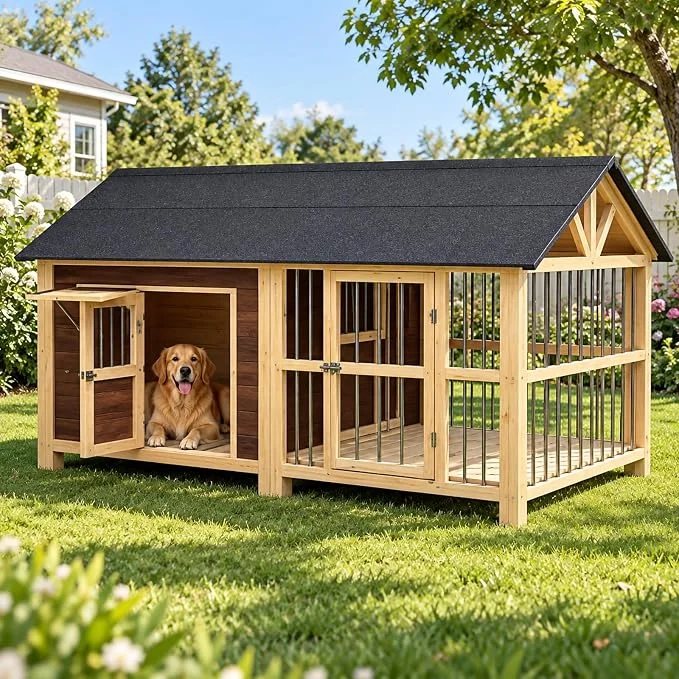
The Best Dog Houses for Large Dogs in 2026 (Budget to Premium)
If you own a large or giant breed, a generic dog house simply won’t cut it. Heavyweight breeds like Great Danes, Mastiffs, Saint Bernards, Newfoundlands, and German Shepherds generate far more body heat, need significantly more headroom to stand and turn around, and put far more stress on hinges, floors, and door frames than a shelter built for a Beagle can handle. Even massive working crossbreeds—such as a full-grown Great Pyrenees and Bernese Mountain Dog Mix—require heavy-duty framing and generous doorway clearance just to step inside without hunching.
Three factors decide whether a large dog house actually works: correct sizing (with clearance, not just a snug fit), weatherproofing (insulation, roof drainage, wind-blocking doors), and build quality (materials and hardware that survive years outdoors, not one winter). Below are three options across price tiers, each reviewed on those criteria.
Quick Comparison Summary
| Product Name | Price Category | Primary Material | Best For |
|---|---|---|---|
| Ketive Insulated Outdoor Dog House (Adjustable) | Budget ($239.99 ) | Insulated fir wood panels | Owners who need functional, adjustable weatherproofing without a big spend |
| Official Dog House – Wooden Dog House Feeder Combo | Mid-Range ($500–$550) | Fir wood with anti-chew iron frame | Owners who want an all-in-one shelter + feeding station with heavy-duty hardware |
| Blythe Wood Works Giant Dog House | Premium ($1,900+) | Solid cedar, insulated panels | Giant breeds (Great Danes, Mastiffs, Saint Bernards) needing a permanent, customizable structure |
Product #1: Ketive Insulated Outdoor Dog House (Budget Tier)
Link: View on Amazon
Category: Budget / Entry-Level Outdoor Shelter
Best For & Weight Capacity
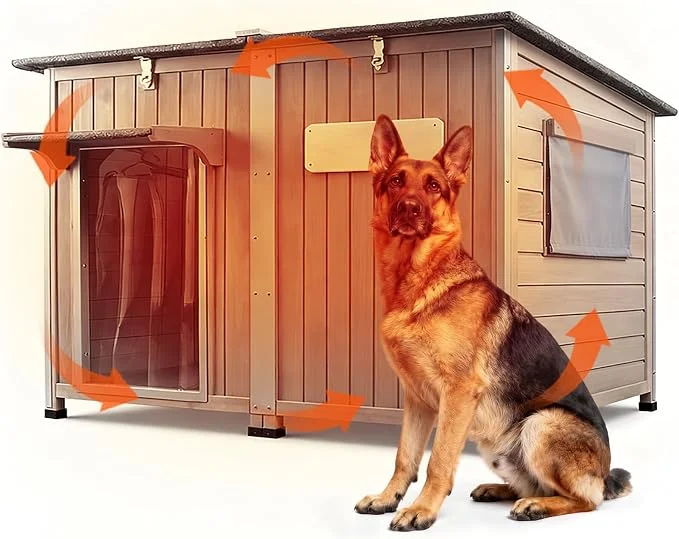
Ketive’s line is built for owners who want genuine cold-weather protection for a medium-to-large dog without a premium price tag. The panel construction in this series is rated for up to roughly 200 lbs of bearing capacity, making it viable for large breeds like Labradors, Golden Retrievers, and German Shepherds — though it’s not intended for giant breeds.
Detailed Overview
The core selling point is the insulated panel construction: thick fir-wood wall panels (around 0.47″ thick in this product line) sandwich an insulating layer, which does more to buffer temperature swings than the thin single-wall plastic housing common at this price point. Several models in the range include adjustable, removable feet or a raised floor, which lifts the interior off cold or wet ground — a critical detail for winter use, since ground contact is one of the biggest sources of heat loss in an outdoor shelter.
Weatherproofing comes from a removable PVC door curtain that blocks wind and rain while still letting the dog come and go freely, plus a slanted asphalt-shingle roof designed to shed water and snow rather than pool it. The roof is also hinged or removable for interior cleaning and bedding swaps.
Key Specifications & Features
| Feature | Detail |
|---|---|
| Wall material | Insulated fir wood panels (~0.47″ thick) |
| Weight capacity | Up to ~200 lbs |
| Roof | Slanted, weatherproof asphalt-shingle style |
| Door | Removable PVC weather curtain |
| Base | Raised/adjustable feet for ground clearance |
| Assembly | Pre-drilled panels, hand tools required |
Pros & Cons
Pros
- Genuine insulated-panel construction, not just a painted wood box
- Raised floor design keeps bedding off cold, damp ground
- PVC door curtain is a low-cost but effective wind/rain barrier
- Easy to disassemble for off-season storage or cleaning
- Strong value for the insulation-to-price ratio
Cons
- Not rated for giant breeds (Mastiffs, Great Danes) at full adult weight
- Wood requires periodic resealing to prevent long-term moisture damage
- Asphalt roof has a shorter lifespan than metal or heavy-duty composite roofing
- Assembly hardware (screws/nails) can loosen over time and needs occasional re-tightening
Practical Owner Tip
Don’t skip the door curtain, even in warmer months — it’s doing double duty as a draft blocker and a light barrier against rain blowing in sideways. Add a layer of straw or a cedar-shaving bed underneath any blanket in winter; straw traps air and insulates even when it gets a little damp, while blankets absorb moisture and can end up making a doghouse colder, not warmer. Reseal exposed wood seams annually with a pet-safe exterior sealant to keep the insulation layer from taking on water.
Product #2: Official Dog House – Wooden Dog House Feeder Combo (Mid-Range Tier)
Link: View on OfficialDogHouse.com
Category: Mid-Range All-in-One Utility Shelter
Best For & Weight Capacity
This is built specifically for large breeds and is marketed as a combined shelter-and-feeding-station setup — ideal for owners who want to consolidate a dog’s outdoor sleeping and feeding area into a single, secure structure. It’s sized generously enough for large dogs, with an interior clearance of roughly 40″ tall x 21.65″ deep x 43″ wide.
Detailed Overview
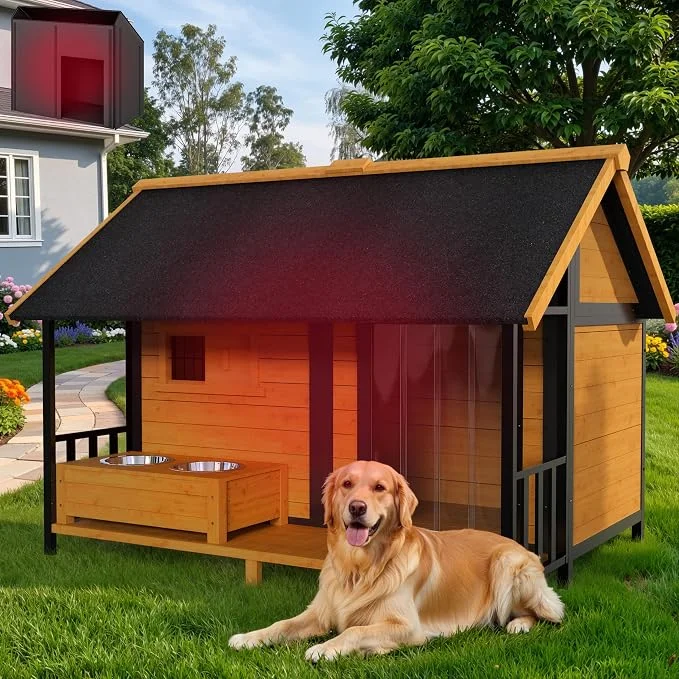
The standout feature here is the integrated feeder station: the house ships with two stainless steel food bowls built into the structure, meaning the dog eats and shelters in the same footprint — useful for kennel runs or yards where you want feeding contained in one spot rather than scattered bowls.
Construction is fir wood with a pet-safe protective finish, reinforced by a heavy-duty anti-chew iron frame running through the core structure. This iron frame is the real differentiator versus pure-wood competitors — it resists the scratching, chewing, and general roughhousing that eventually destroys softer wood-only builds. The raised design keeps the floor dry, and a PVC door curtain manages rain and retains warmth, while a sliding window offers adjustable airflow that can be closed off entirely in winter.
Key Specifications & Features
| Feature | Detail |
|---|---|
| Overall dimensions | 41.5″H x 41.4″H x 52″W |
| Interior dimensions | 40″H x 21.65″D x 43″W |
| Frame | Anti-chew iron core frame |
| Wood | Fir wood, pet-safe protective finish |
| Feeder | 2 integrated stainless steel bowls |
| Ventilation | Sliding window, closable |
| Door | PVC curtain (rain/wind block) |
| Warranty | 6-month manufacturing defect coverage |
Pros & Cons
Pros
- Iron frame significantly outlasts wood-only construction under chewing/scratching stress
- Integrated feeder eliminates the need for a separate feeding station in the yard
- Raised floor plus sliding window gives real control over airflow and moisture
- Straightforward one-hour assembly with pre-aligned screw holes
Cons
- Price sits well above basic insulated shelters for similar square footage
- Stainless bowls are fixed in place, which limits portability if you want to move feeding indoors
- Not framed as heavily insulated as dedicated winter-specific houses — better suited to moderate climates or supplemented with added bedding in extreme cold
- 25% restocking fee applies on returns, so measure your dog carefully before ordering
Practical Owner Tip
Because the feeder is built into the structure, food odor and spills are concentrated in one location — check under and around the bowl area weekly for pests, especially ants and rodents in warmer months. Wipe the bowls and surrounding wood daily rather than letting kibble dust accumulate in the seams, since trapped moisture and food residue is what eventually rots wood joints from the inside out. During assembly, pre-drill any pilot holes you add for accessories (name plates, extra hooks) — the iron frame is tough on standard screws if you go in blind.
Product #3: Blythe Wood Works Giant Dog House (Premium Tier)
Link: View on BlytheWoodWorks.com
Category: Premium Custom Cedar Shelter for Giant Breeds
Best For & Weight Capacity
This is purpose-built for giant and extra-large breeds — Great Danes, Bull Mastiffs, Saint Bernards, Afghans, and similarly tall dogs. It was originally designed because standard doghouses simply didn’t have the clearance these breeds need. Weight capacity isn’t the limiting factor here; interior height and door clearance are, and this house is engineered specifically to solve that.
Detailed Overview
Built from solid cedar panels, this is a genuinely different category of product from the mass-manufactured options above — it’s a hand-assembled, insulated structure made from seven pre-drilled panels rather than a flat-pack import. Cedar is naturally rot- and insect-resistant, which matters enormously for a structure meant to live outdoors permanently rather than get replaced every couple of seasons.
The door is elevated nearly six inches off the floor specifically to accommodate the height and stride of giant breeds, and the house ships with a stationary real-glass window with shutters — a detail you won’t find in budget or mid-range imports. It comes standard with a heavy-duty vinyl flap door, and because it’s built by a small manufacturer rather than mass-produced, it’s genuinely customizable: options include AC units, heated pads, a raised foundation, a porch/deck extension, and reinforced “Seal Safe” doors.
Key Specifications & Features
| Feature | Detail |
|---|---|
| Exterior dimensions | 60″W x 40″D x 58″H |
| Door opening | 18⅛”W x 26⅛”H, elevated ~6″ off floor |
| Material | Solid cedar, insulated panel construction |
| Window | Real glass, with shutters |
| Door | Heavy-duty vinyl flap (standard) |
| Assembly | 7 pre-drilled panels, hand assembly |
| Customization | AC unit, heated pad, raised foundation, porch/deck, upgraded door options |
| Price | Starts around $1,924 (accessories priced separately) |
Pros & Cons
Pros
- Purpose-built clearance and door height for genuinely giant breeds
- Solid cedar construction resists rot and pests without chemical treatment
- Real customization: heating, air conditioning, raised foundations, and reinforced doors are all optional add-ons
- Small-batch manufacturer with a decades-long track record (reviewers report houses lasting 10+ years outdoors)
- Real glass window adds natural light and ventilation control beyond a simple vent hole
Cons
- Significant upfront cost, especially once accessories (AC, heater, foundation) are added
- Heavier and bulkier — this is a permanent yard fixture, not something you reposition seasonally
- Assembly, while pre-drilled, is a bigger job than snapping together budget kits given the size and solid wood weight
- Add-ons (porch, raised foundation, AC) can push total cost well past $2,500
Practical Owner Tip
If you’re in a climate with real winters or summers, budget for the Hound Heater or DogAire AC add-on from the start rather than retrofitting later — the panels are designed to accept these cleanly, and integrating them at build time avoids drilling into finished insulated walls afterward. Reseal exposed cedar surfaces every 1–2 years with a UV-resistant, pet-safe exterior stain to preserve the wood’s natural rot resistance long-term. If ground moisture is a concern, add the raised foundation option upfront — cedar resists rot well, but constant ground contact in wet soil will still shorten the lifespan of any wood structure.
Buying Guide: How to Choose a Dog House for Large Dogs
Quick Sizing Formula
Getting the size right matters more for large dogs than any other factor, because too much space wastes body heat and too little space causes real discomfort.
- Measure nose to base of tail while your dog is standing naturally (not stretched).
- Measure shoulder height from floor to the top of the shoulder blades (withers).
- Add clearance: the interior length should be your dog’s nose-to-tail measurement plus 6–12 inches, and interior height should be shoulder height plus 4–6 inches — enough for the dog to comfortably turn around and lie fully stretched out, but not so much extra volume that body heat disperses into empty space.
- Door width and height should allow your dog to enter without ducking or squeezing — generally shoulder width plus a few inches, and shoulder height plus at least a couple of inches of clearance.
Key Considerations
Insulation & weather protection
- Double-wall or foam-core insulated panels perform dramatically better than single-wall wood or plastic in both winter cold and summer heat.
- A wind-blocking door (vinyl flap or offset entryway) prevents drafts from canceling out whatever insulation the walls provide.
- Roof design matters: sloped, shingled, or metal roofing sheds water and snow far better than flat tops, which pool water and eventually leak.
Elevated bases
- Ground-level contact is a major source of heat loss and moisture intrusion. Raised floors, adjustable feet, or a dedicated raised foundation keep the interior drier and warmer year-round.
- In wet climates, elevation also protects against flooding and mud buildup at the entrance.
Entry door sizing
- Oversized doors let in more wind and rain; undersized doors force large dogs to duck or squeeze, which they’ll eventually avoid using altogether.
- Offset or elevated door placement (as seen in giant-breed builds) reduces direct wind exposure into the sleeping area.
Conclusion
Choosing the right dog house for a large or giant breed comes down to balancing your local climate, budget, and your dog’s physical clearance needs. The Ketive Insulated Dog House offers strong budget value with raised flooring and thermal panels, while the Official Dog House Feeder Combo provides a durable, mid-range option with an iron-reinforced frame and built-in feeding station. For giant breeds needing a permanent, all-weather shelter, the solid cedar Blythe Wood Works Giant Dog House remains the gold standard in premium craftsmanship.
Whichever shelter you choose, measure your dog accurately using the sizing formula, elevate the foundation off damp soil, and check out our guide to the best dog houses for summer to ensure proper ventilation and heat management during warm weather.
FAQ
Should I use straw or blankets for winter insulation?
Straw is generally the better choice for outdoor housing. It traps air pockets that insulate even when slightly damp, and it doesn’t hold moisture against a dog’s fur the way blankets can. Blankets that get wet from snow, rain, or condensation actually pull heat away from the body faster than no bedding at all. If you use blankets, check and replace them frequently to keep them dry.
How much insulation does a large dog house actually need in winter?
For sustained freezing temperatures, look for foam-core or double-wall insulated panels rather than single-layer wood or plastic, combined with a wind-blocking door. In extreme cold, a heated pad or heater add-on (as offered on premium builds) provides meaningful additional protection beyond passive insulation alone.
How do I prevent moisture buildup inside the dog house?
Elevate the floor off the ground, ensure the roof has a slope or overhang that directs water away from the entrance, and include at least one adjustable vent or window that can be opened in warm weather to reduce condensation. Check bedding regularly and swap it out at the first sign of dampness.
Do large dog houses need more ventilation than small ones?
Yes — more interior volume and a bigger dog generating more body heat and moisture (from breathing and panting) mean stagnant air and condensation build up faster. A closable vent or sliding window, rather than a sealed box, lets you balance warmth retention against airflow as seasons change.